
Microlandia, the brutally honest city builder, arrives on Steam.
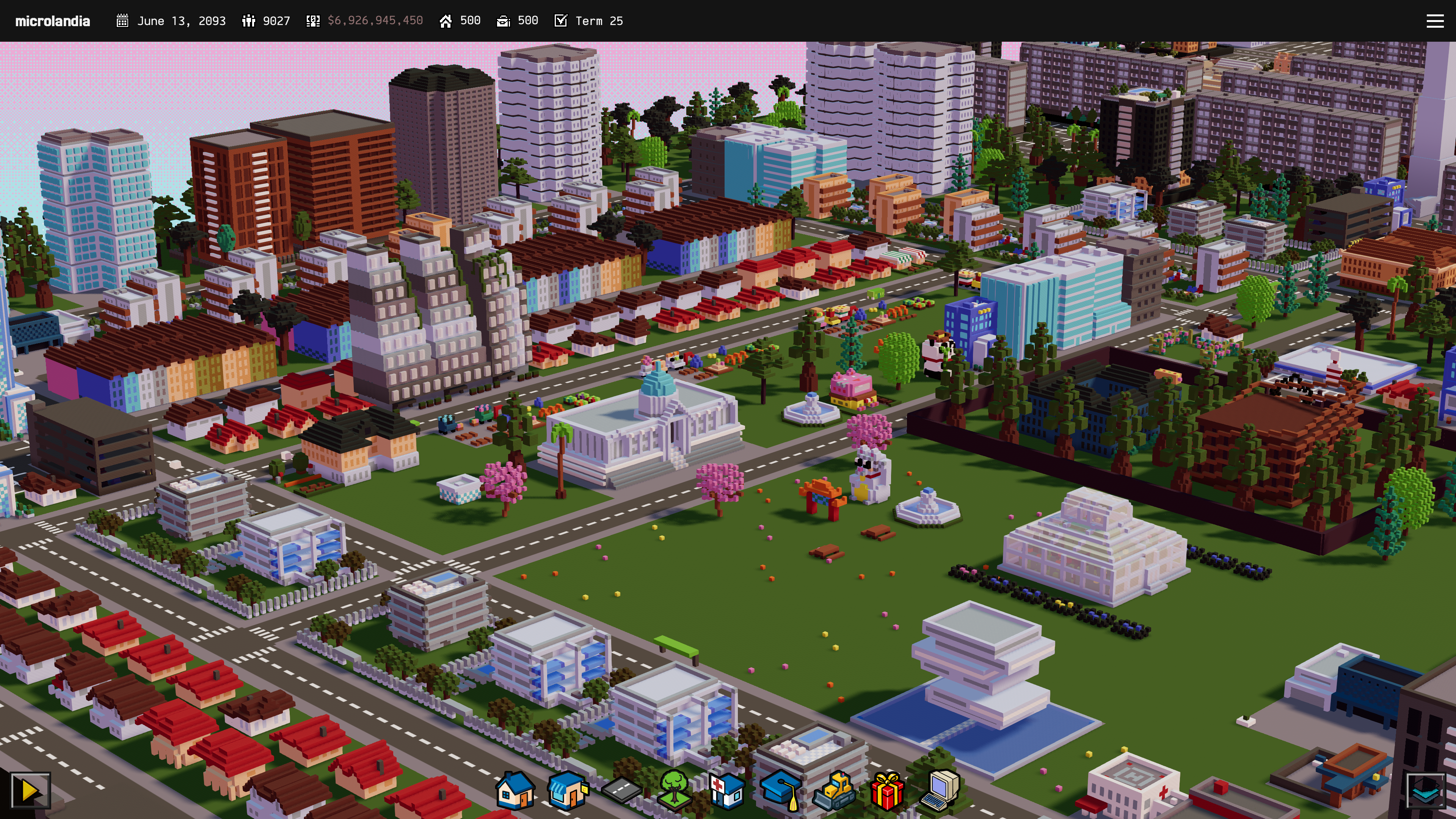
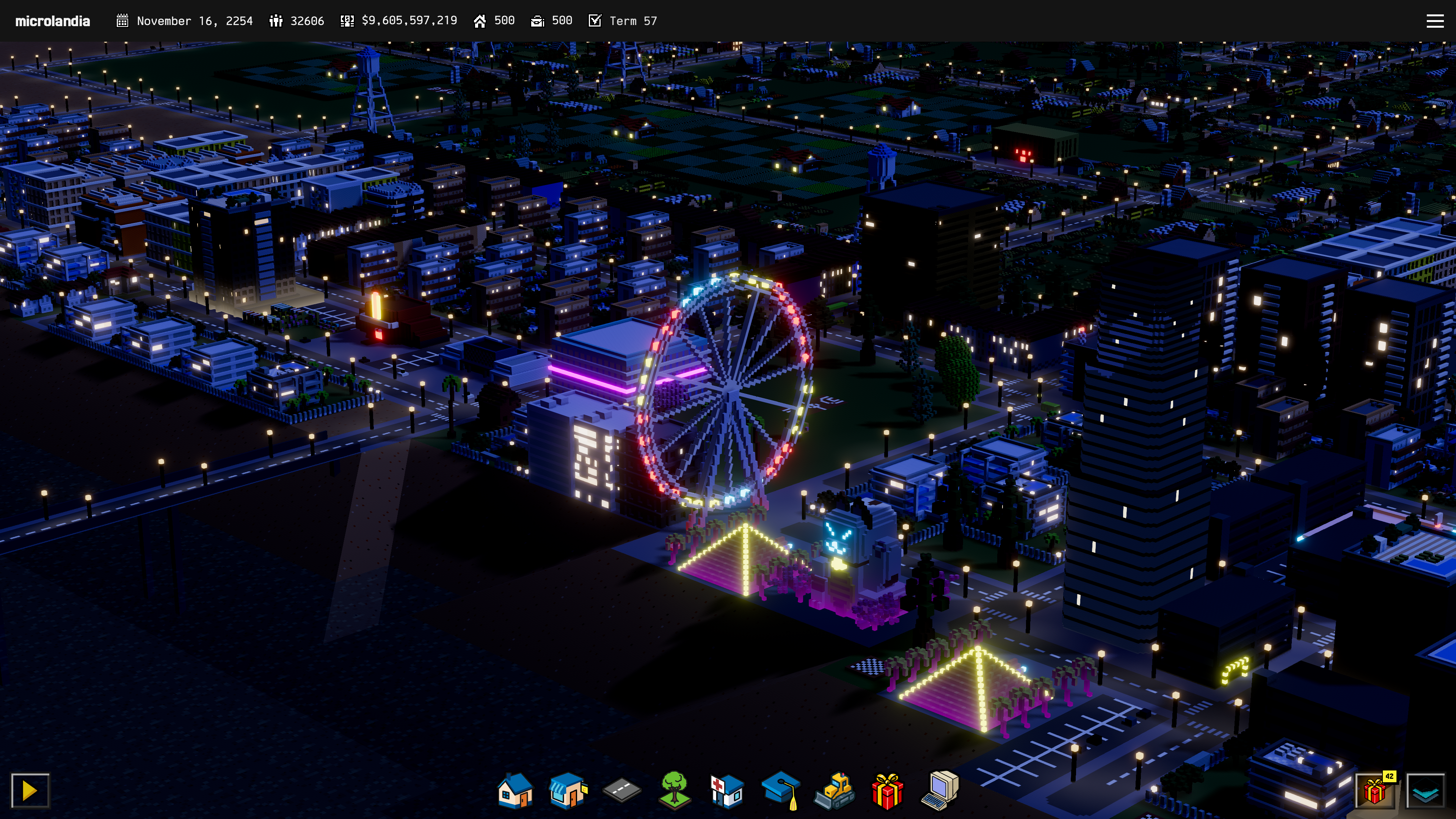
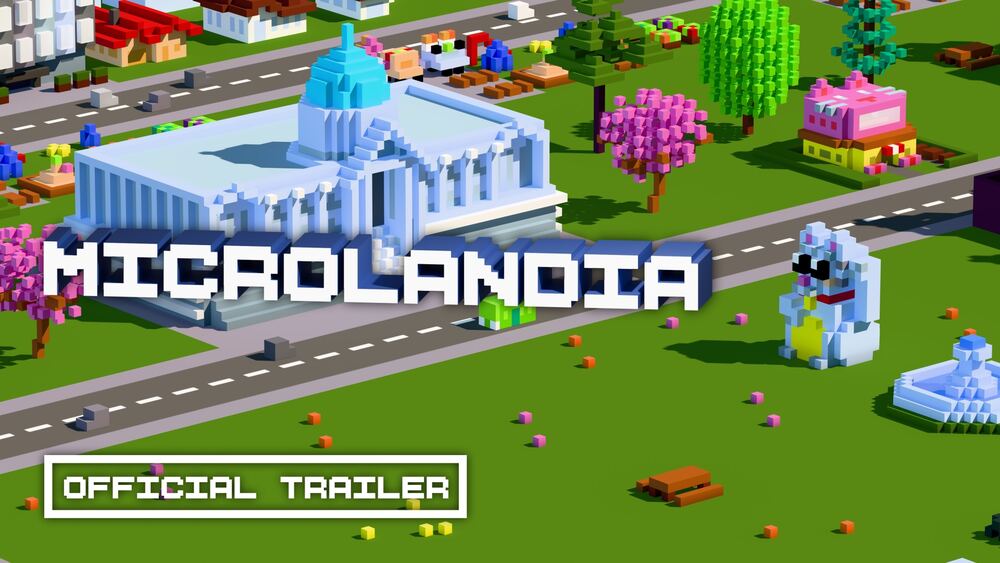
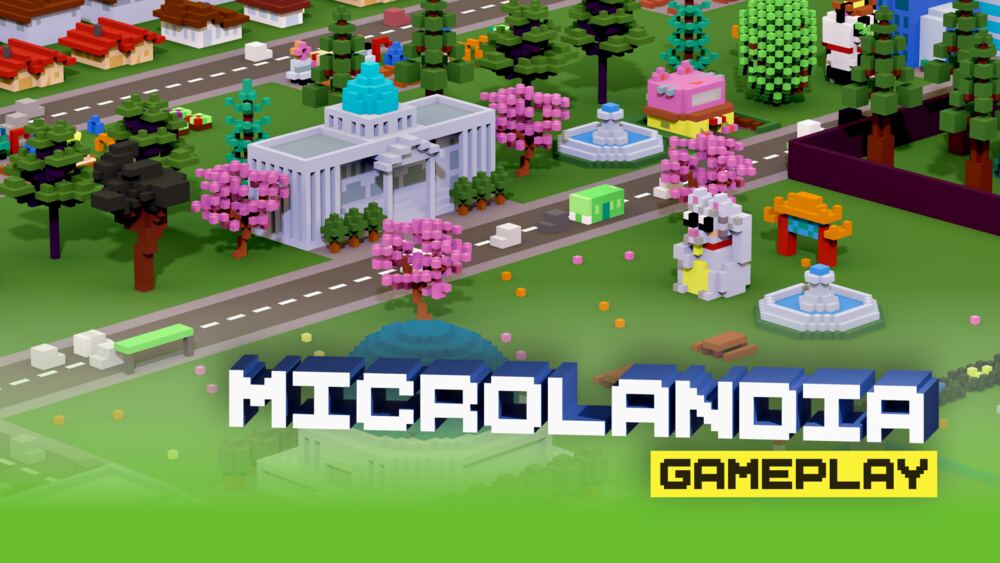
Cute voxels, hard reality. Pull the strings and watch your town grow into a metropolis. Every citizen is simulated one by one: they work, pay rent, get sick, go broke. Make the wrong calls and bankruptcy is on the table.
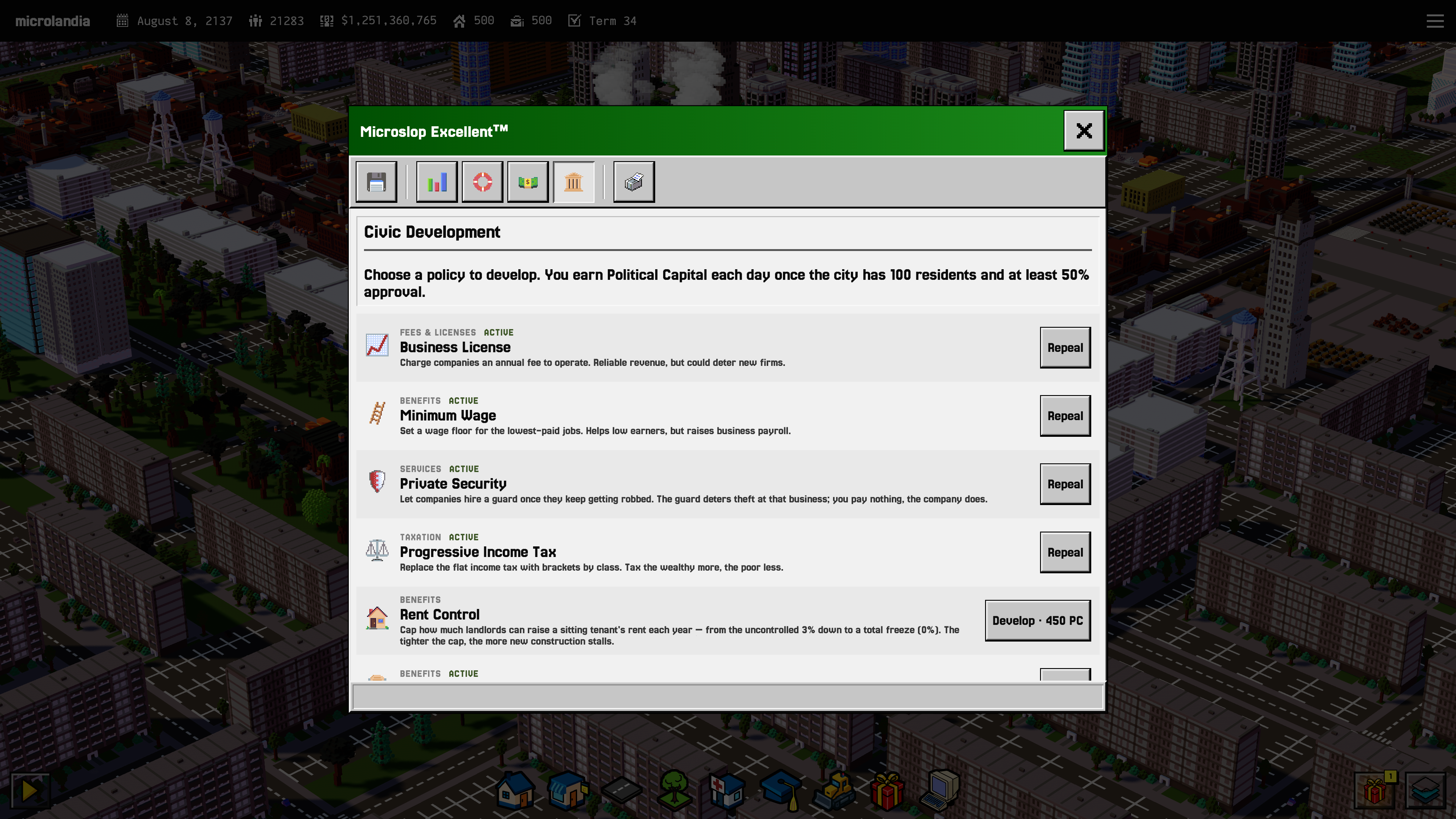
Microlandia is the newest title in the city builder genre, but with a radical difference: a social and economic simulation runs the whole game, and it doesn’t sweep the challenges of city life under the rug: housing shortages, mobility, corporate taxes, the cost of public services, and on and on…
This game grew out of a question its director Cristián had already asked himself as a child:
“When I was a kid, I could spend the whole day playing SimCity, but when I went outside, I saw graffiti, people living on the streets, and a lot of other things that the game left out, which, in my opinion, was giving me a false understanding of how a city works.”
Microlandia’s answer is to simulate what that game left out, with its numbers drawn from real-world datasets: the World Bank, the U.S. Bureau of Labor Statistics, the OECD, and many more.
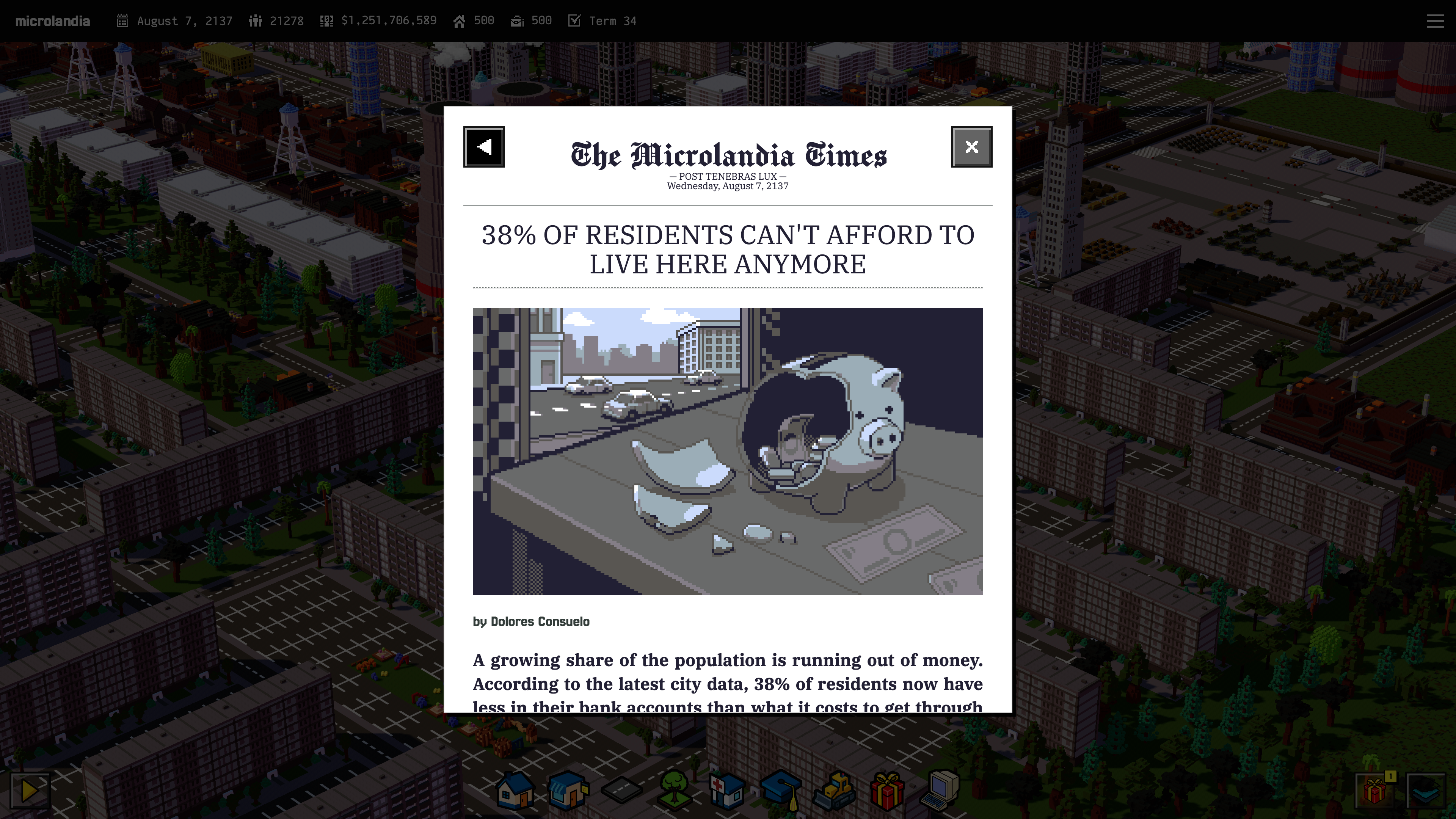
This input gives Microlandia a depth rarely seen in the city builder genre. The seriousness of the simulation, however, stands in stark contrast to a narrative layer full of humor and gimmicks. Players have to pay attention to in-game elements that help them diagnose what is happening in their town, for example by reading the sensation-hungry local press, which follows every move you make critically.
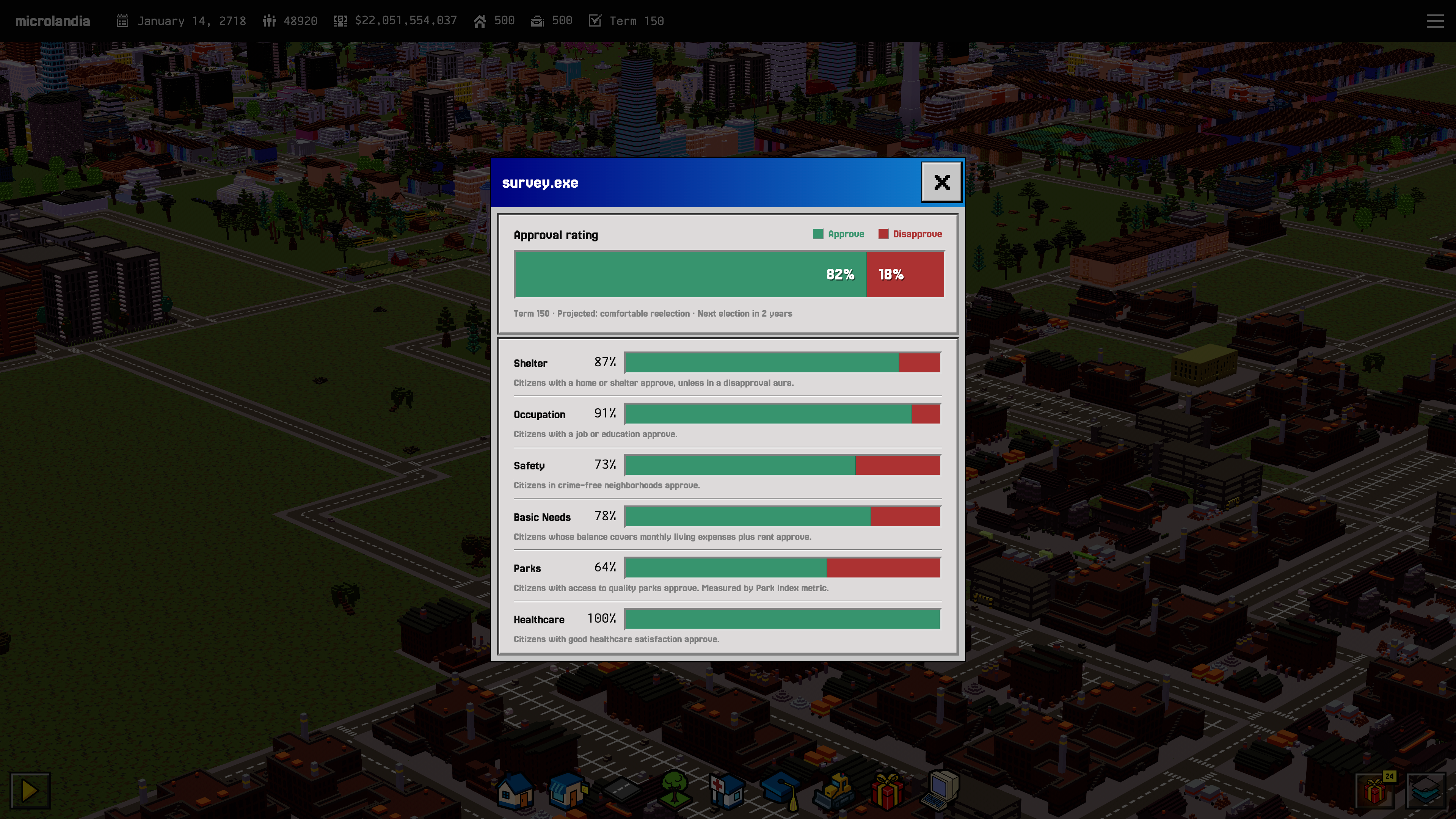
In Microlandia, democracy is not a backdrop, but the core mechanic that keeps you from losing. Every five in-game years, an election decides whether you stay in office. The outcome is shaped by six approval categories: shelter, occupation, safety, basic needs, parks, and healthcare. A live polls panel lets you track your approval in each category, while the newspaper holds you publicly accountable for every decision along the way.
Microlandia is available on Steam for Windows, Mac and Linux as of December 3, 2025, and can be purchased for just $8.99 USD (€8.99). It is also available on Itch.io for the same price, with the option to receive a Steam key.
Events
Microlandia is part of the Indie Arena Booth gamescom 2026 Official Selection. The game was selected for “Democracy at Play,” a showcase curated by Germany’s Federal Agency for Civic Education (bpb) in collaboration with Indie Arena Booth that explores how games engage with democracy. Read the event details from the bpb. Play it August 26–30 at gamescom in Cologne, Hall 10.2.
Microlandia is also exhibiting at ChinaJoy 2026. Come play Microlandia at booth W4-B-IG090, July 31 – August 3 at the Shanghai New International Expo Center. Press, creators, and players are all warmly welcome; Steam review keys are available on request.
Features
-
Democracy as the win condition: Every five in-game years an election decides whether you stay in office. Your approval combines six policy fields (shelter, occupation, safety, basic needs, parks, and healthcare), and a live polls panel shows each rating. Lose the vote, the run is over.
-
Budgets with bite: Roads cost real money. Pensions and public services tear deep holes in your budget. Where to save? Where to invest?
-
Real estate sharks: Housing shortages drive rents up, and landlords smell the next deal. Rehousing the unhoused becomes a visible task.
-
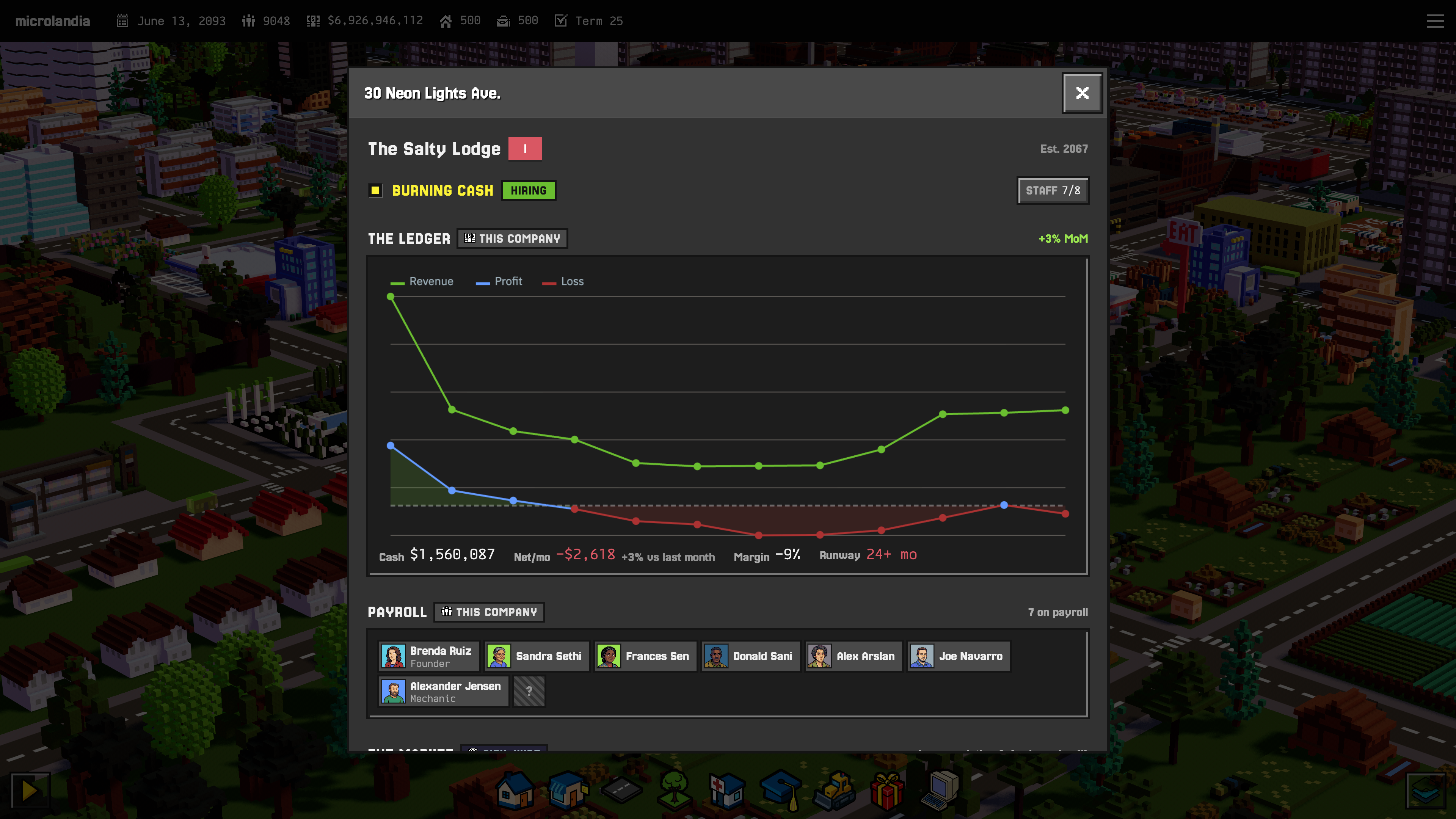
It’s (not) just business: Bring companies into your city to fuel prosperity. Pull the right strings. Only black numbers protect you from the insolvency-driven wave of unemployment.
-
Healthy and well: Hospital bed capacity and ambulance coverage shape mortality, migration, and the mood of voters.
-
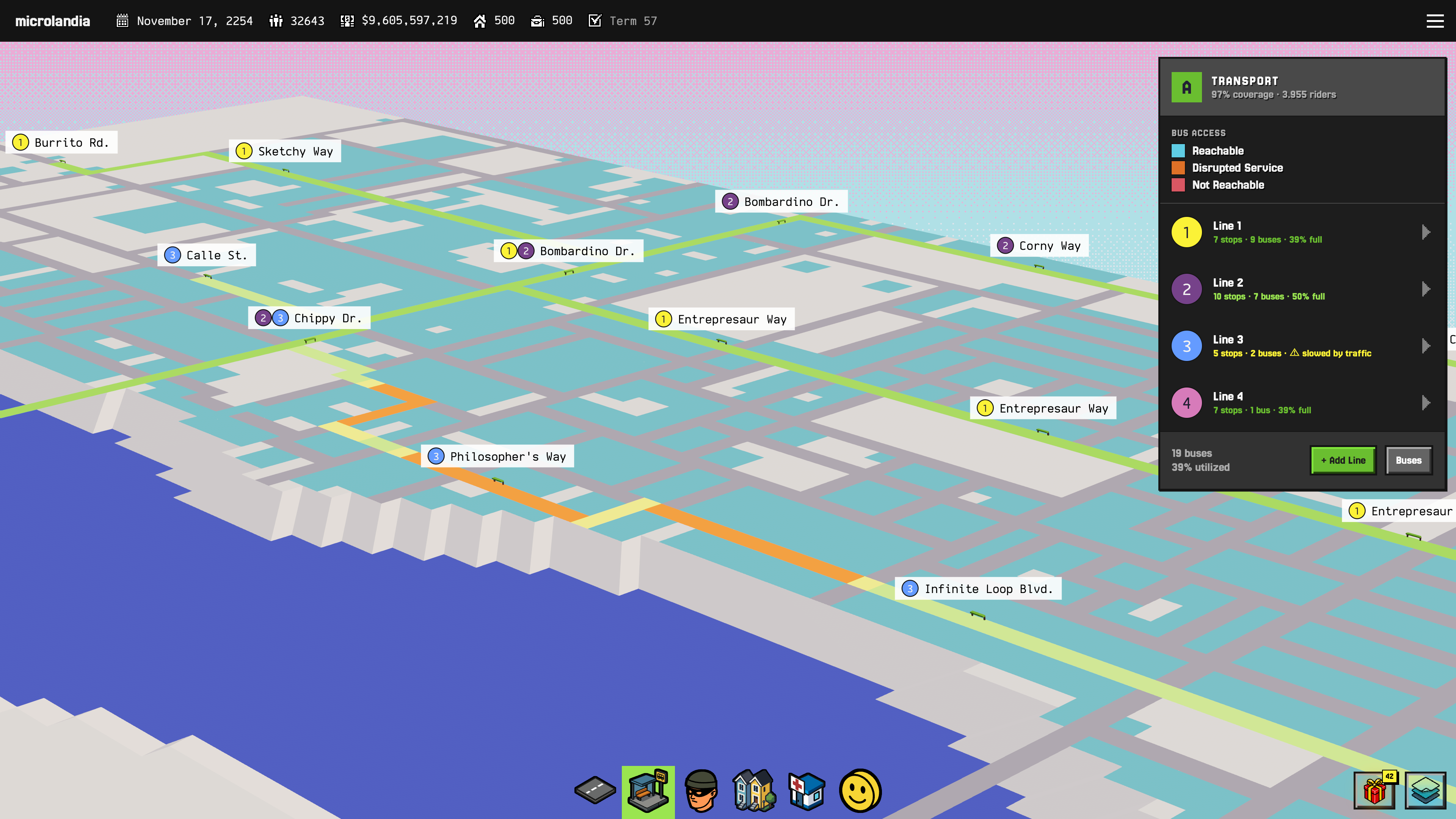
Traffic that moves: Buses bring in revenue but require careful planning. Street parking and garages decide whether your citizens can reach their jobs at all.
-
What’s going on here???: Economic crises, heatwaves, ransomware: unexpected events put you and your city to the test. All under the eyes of the watchful local press, which celebrates your decisions or pillories you.
Screenshots
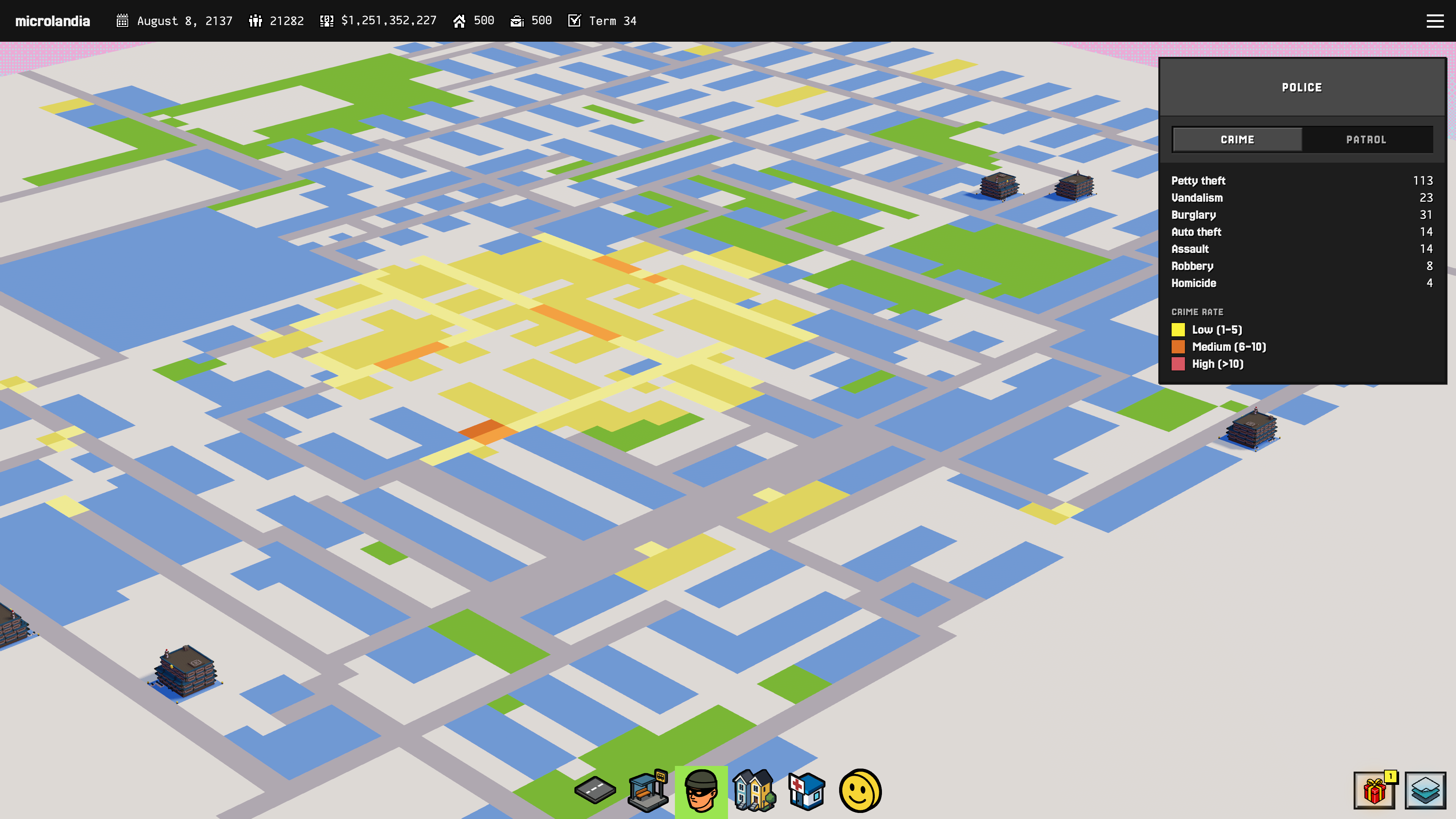
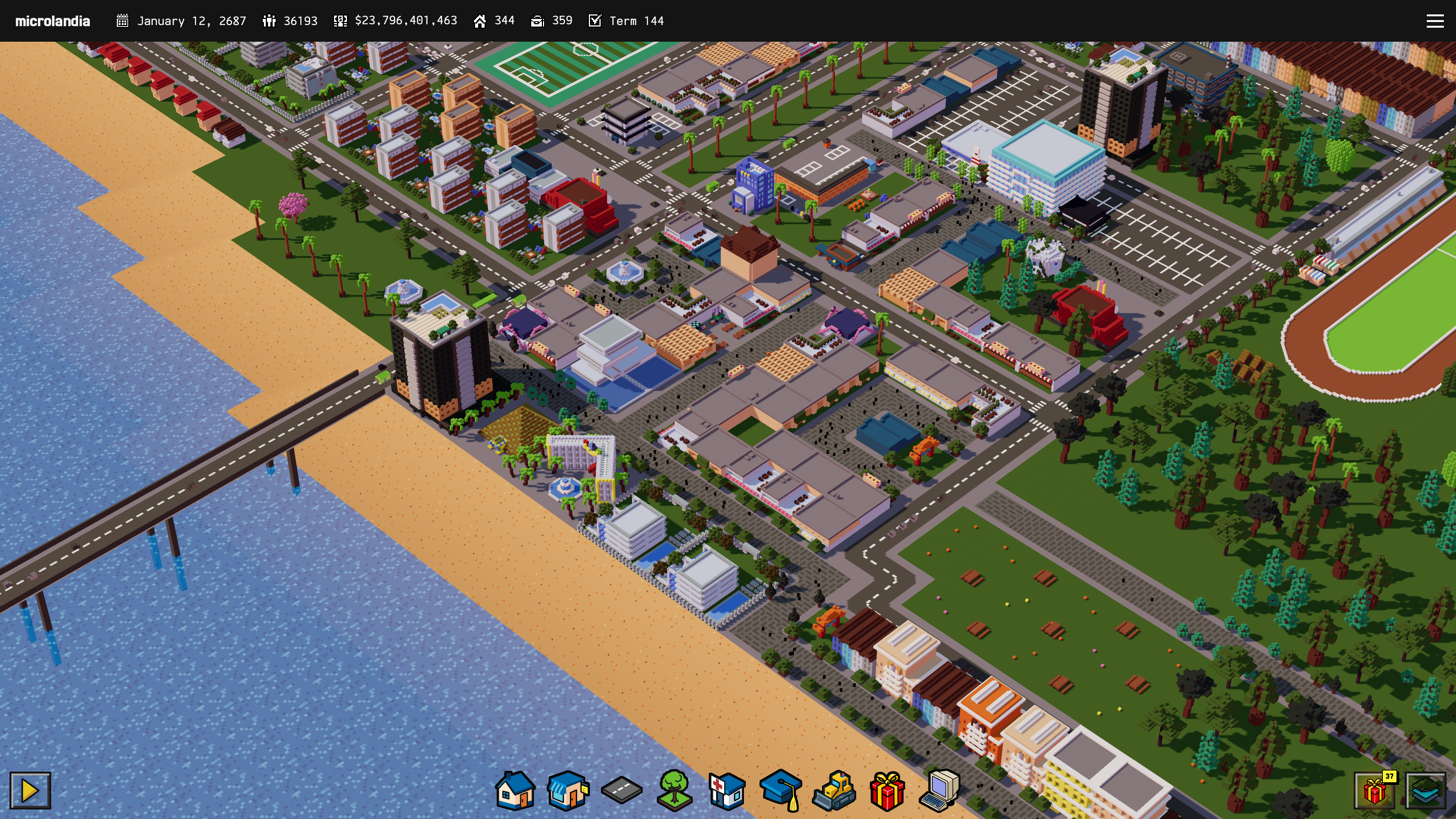
Other assets
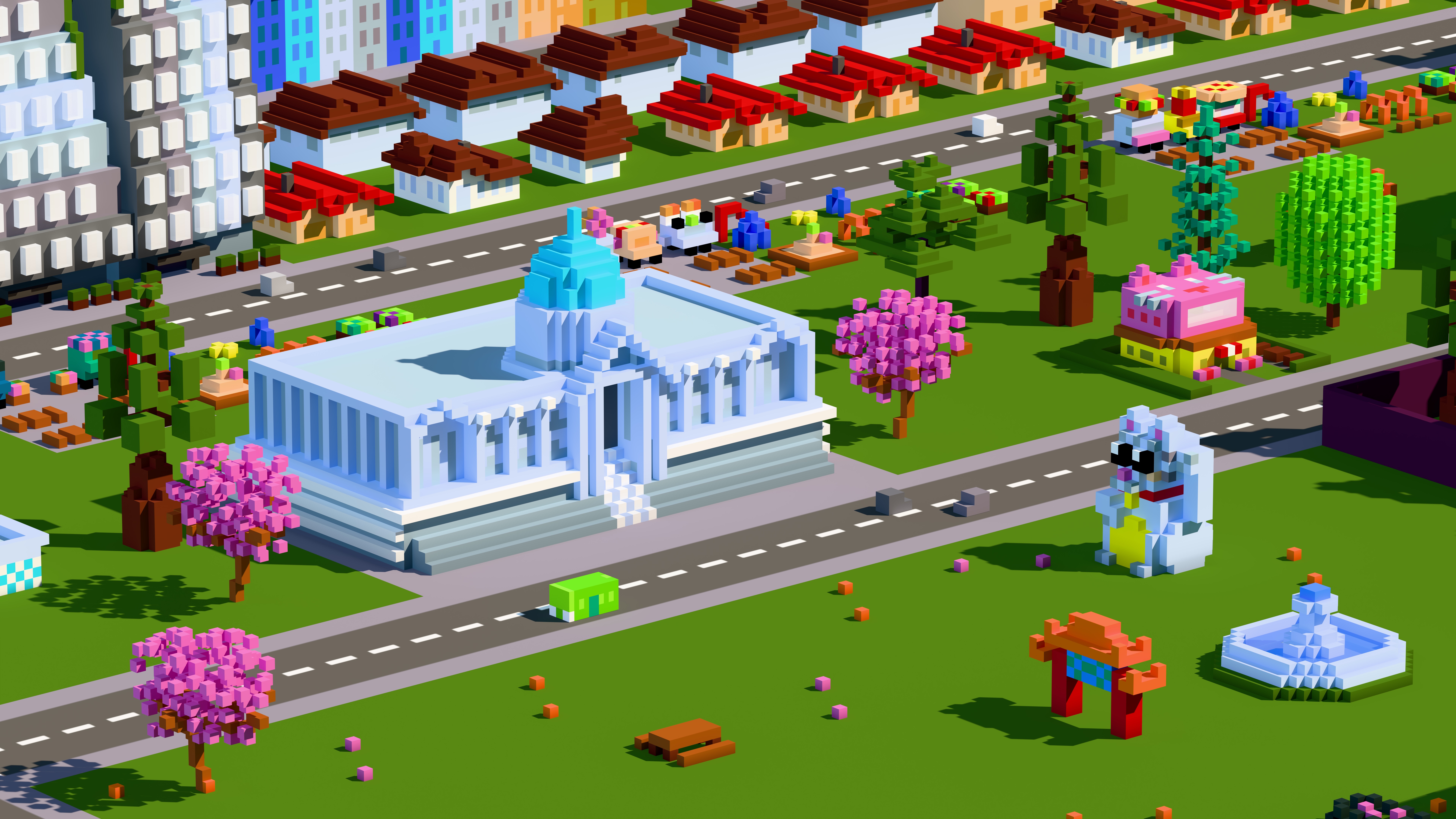
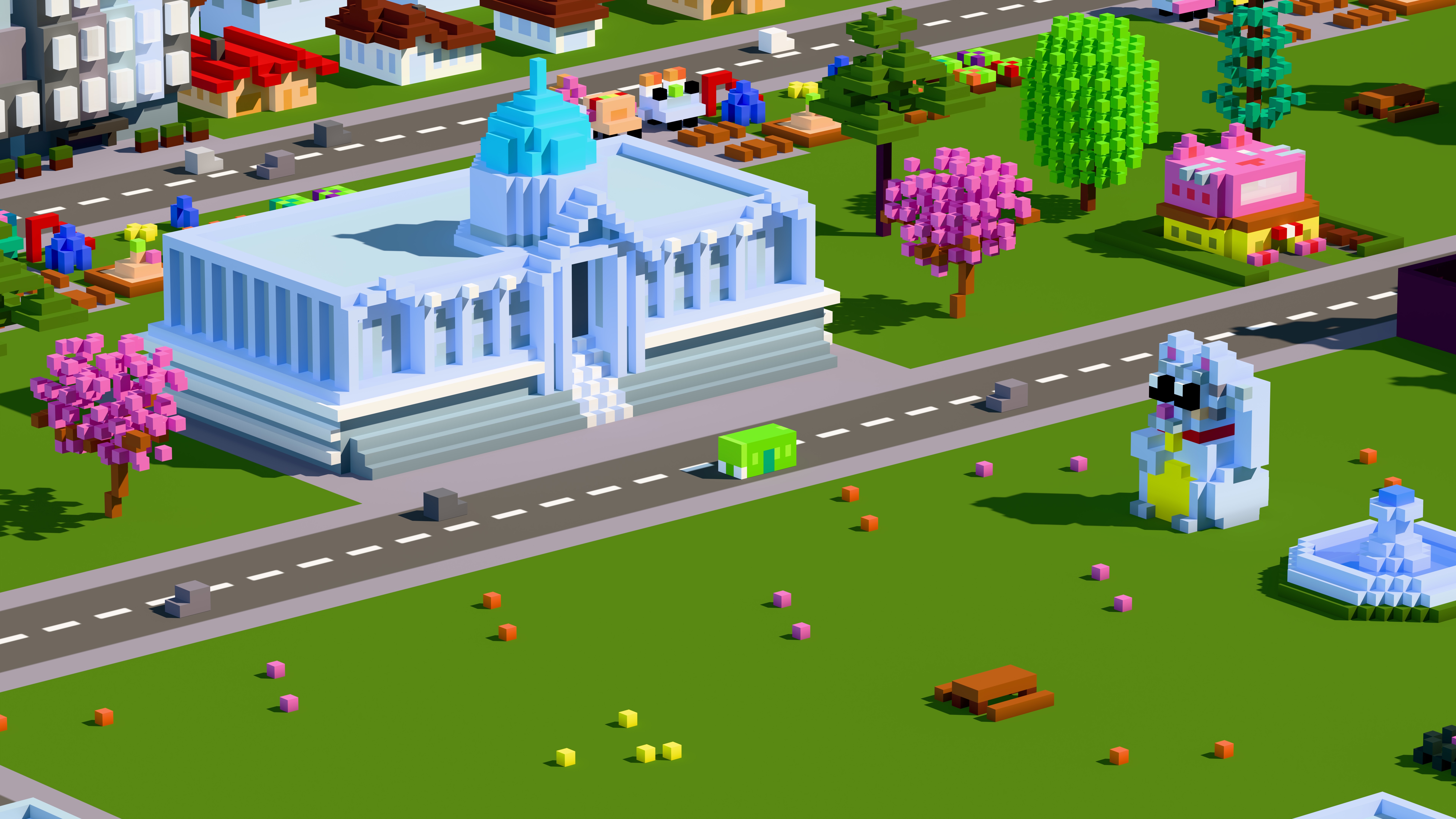
Previews link to the full-size file. The TIFF masters and the video files are hosted on Google Drive.
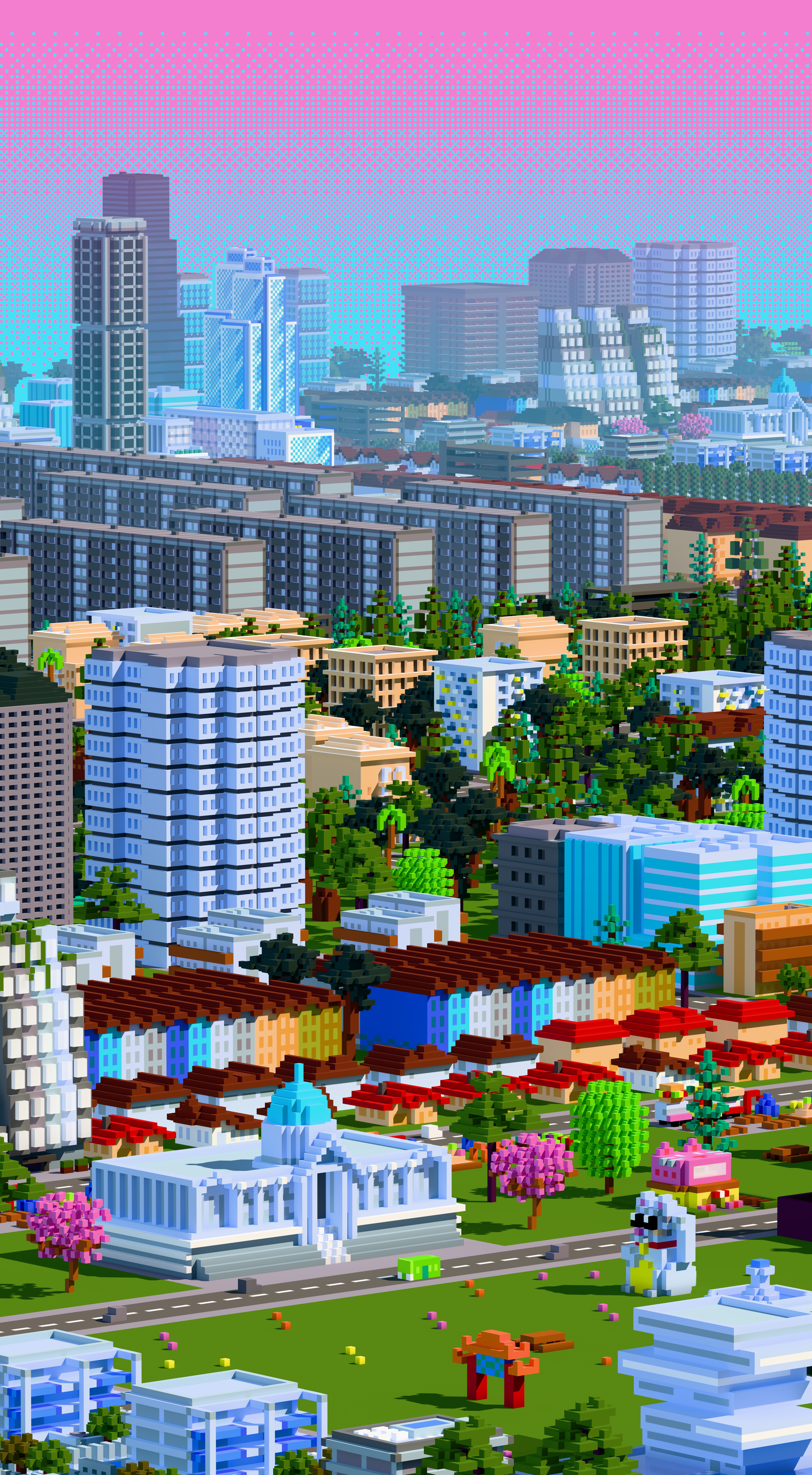
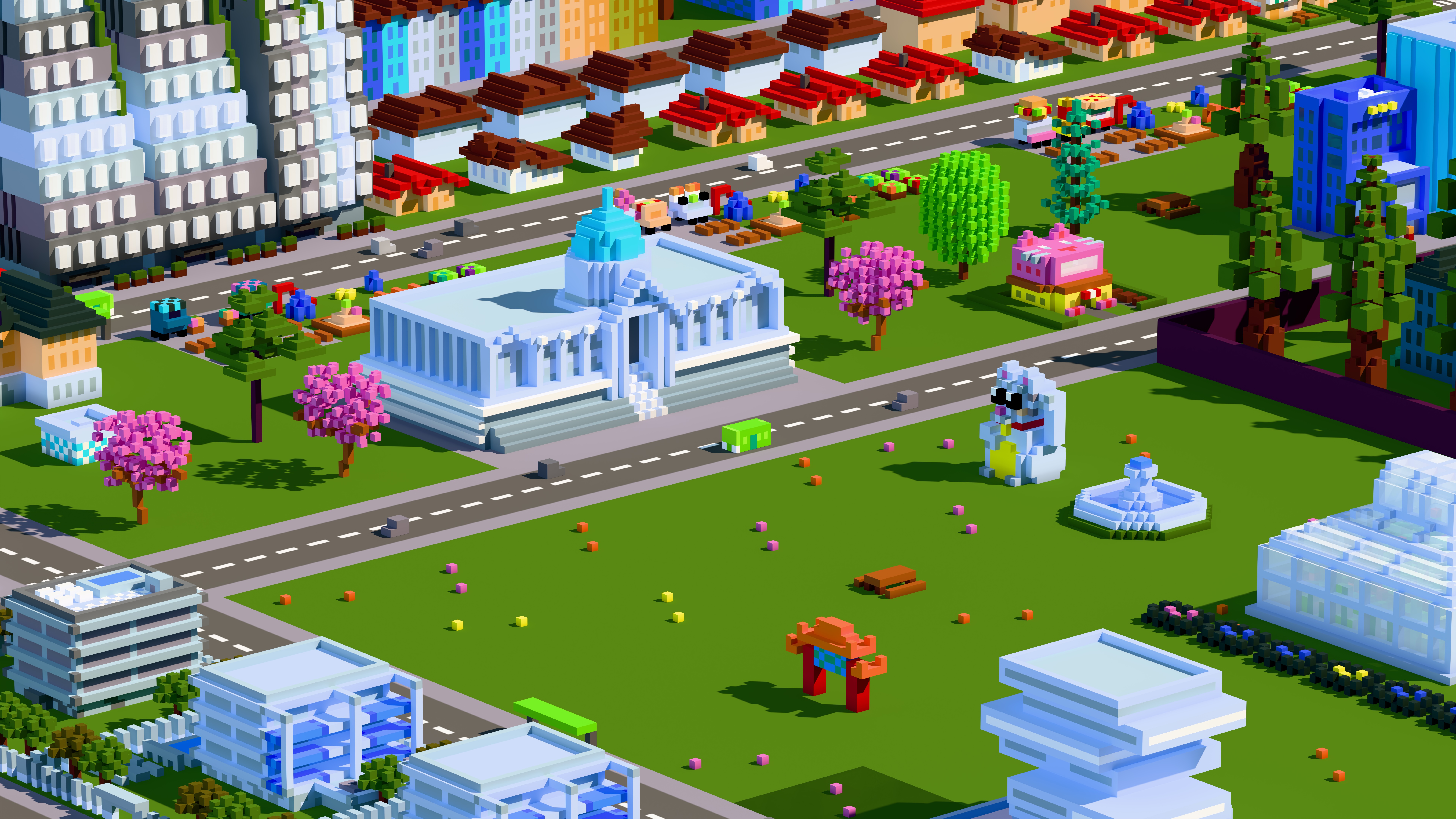
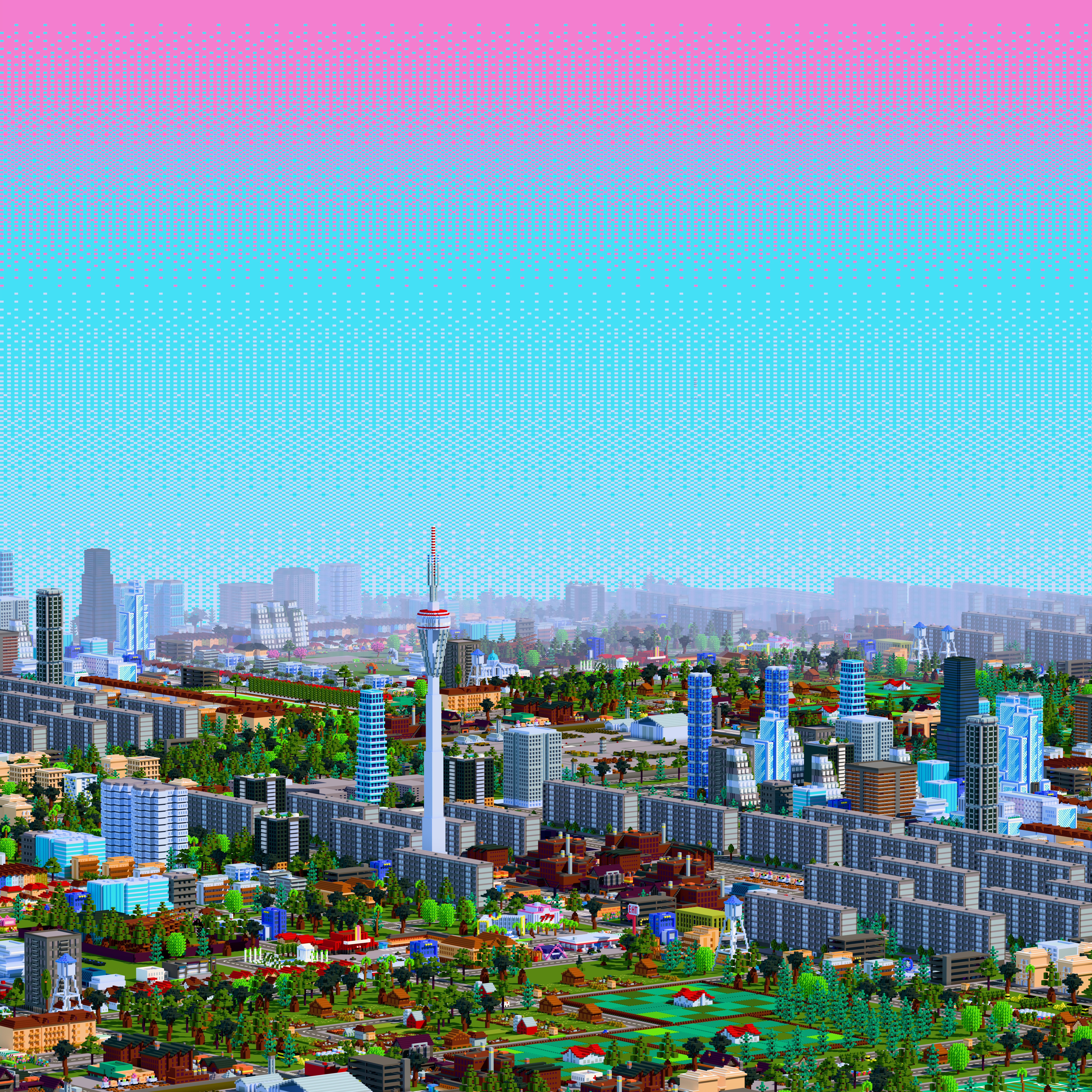


Fact sheet
- Release date: December 3, 2025 at 10:00 AM PST
- Genre: Simulation
- Price: $8.99 USD / €8.99
- Platforms: Steam (Mac, Windows, Linux) and itch.io (Mac, Windows, Linux)
- Studio: Information Superhighway Games (based in Berlin, Germany)
- Events: gamescom 2026 (August 26–30, Cologne, Hall 10.2), Indie Arena Booth Official Selection / “Democracy at Play”; ChinaJoy 2026 (July 31 – August 3, Shanghai New International Expo Center), booth W4-B-IG090
- Languages: English, German, Spanish, French, Italian, Polish, Portuguese, Turkish, Japanese, Korean, and Simplified Chinese
Links
In the press
- 80 Level: Developing Microlandia, a Socioeconomic City Builder Based on Real-World Data (2026-04-10)
- PC Gamer: 'Brutally honest' city builder Microlandia gets brutally honest crime simulation: 'It's a spectrum of consequences that can become a death spiral every single day' (2026-01-25)
- Rock Paper Shotgun: Microlandia is a 'brutally honest' scion of SimCity that thinks of cities as 'beautiful but insane machines' (2026-01-08)
- PCGamesN: Cities Skylines' traffic headaches are nothing compared to this brutal new city builder, where your population's lives are literally on the line (2025-11-03)
- PC Gamer: This 'brutally honest' city builder features greedy landlords, cutthroat corporations, and a newspaper that gives you 'a constant reminder that your citizens' bad luck is perhaps your fault' (2025-10-06)
Credits
- A game by: Information Superhighway Games
- Game Director: Cristián González (Explodi)
- Art Director: Karen Cristi
- Original soundtrack by: Pablo Rubio
- Artists: AyeChan3D, Karen Cristi, Metarupx, Oscar Arancibia, Pentakie, Pratama Maulana
- Special thanks to: Brian Mayer, eyZo, gamingoffiziell, Gustavo Maluenda, Pascual Sotomayor, Marek (Purfle), Millezime, Renato Garretón, René Mujica, the_narv, Yuri, VRuno
- Open-source libraries: ANGLE, Dawn, FreeType, HarfBuzz, Hermes, ICU, LevelDB, libunibreak, SDL, Snappy, Yoga
Reviewer’s guide
Core systems cheat sheet
- Budgets & Ledgers
- Monthly expenses pull directly from real line items: pensions default to $1,500 per retiree; police/fire draw fixed salaries.
- Raising or lowering line-items updates the ledger instantly and drives citizen approval plus newspaper commentary.
- Bankruptcy triggers at –$100M.
- Demand Points
- Earned when residential or commercial occupancy tops 20% of capacity.
- Spending points unlocks additional zoning or marquee projects (e.g., corporate tower) instead of spamming tiles.
- Keep an eye on approval demand: certain builds cost soft political capital before they appear.
- Hospitals
- Beds are hard capacity; each staffed bed consumes roughly $20k/month in staffing and operating costs.
- When bed usage exceeds 100%, citizens are placed on a waitlist where they may die or emigrate, immediately shifting demographics and tax receipts.
- Ambulance coverage affects response time; place hospitals near dense job clusters to minimize mortality headlines.
- Transit & Parking
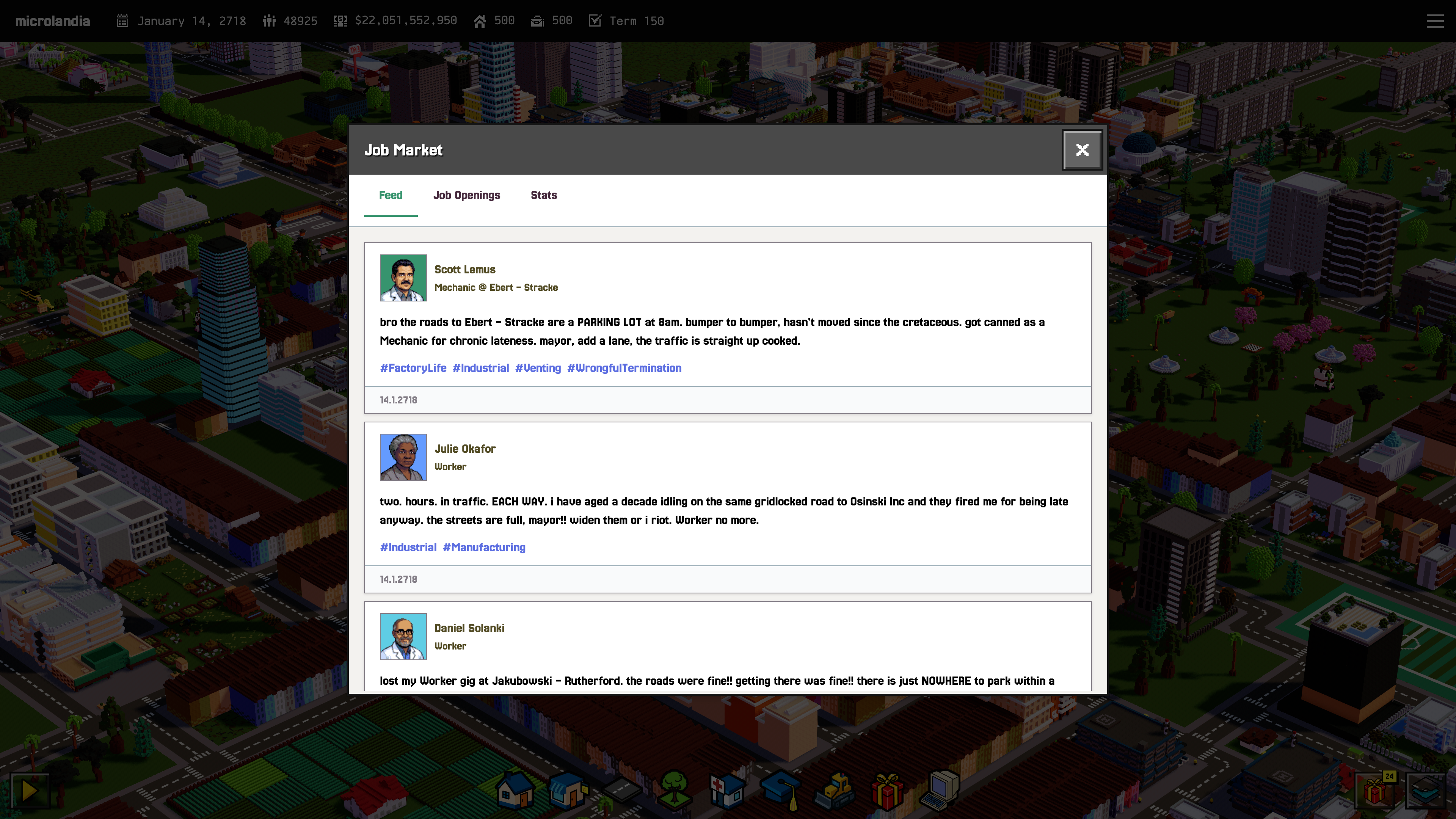
- Every job trip checks for available parking or a bus seat. No available slot means the employee cannot reach work and is fired.
- Street parking defaults to a $12/day fee; use garages or transit to keep lower-income workers employed.
- Bus fares feed operating revenue; adjust cautiously to avoid suppressing ridership.
- Elections & approval
- Elections take place every five in-game years; losing ends the run.
- Approval breaks down across six categories: shelter, occupation, safety, basic needs, parks, and healthcare.
- Open the Polls panel to see per-category ratings; pair it with newspaper headlines to anticipate political fallout before the vote.
- Press & Stats
- The in-game newspaper publishes every major policy outcome; scan headlines to surface housing, labor, or healthcare crises quickly.
- The Stats panel tracks trendlines (homeless population, average rent, unemployment) so you can confirm whether interventions are working before capturing footage.
- Simulation deep dive
- Full parameter tables and data sources live at microlandia.city/docs.
About Information Superhighway Games
Information Superhighway Games is an indie studio in Berlin, Germany. Founded by Cristián (programming and direction) and Catalina (art and design) alongside the first Early Access builds of Microlandia, it has since grown to include more collaborators. They build games without “professional” engines (leaning on open-source tools they love) to make playful systems that explain the world. Early Microlandia builds on Itch.io already attracted press interest; PC Gamer asked: “Is this the Dark Souls of city builders?”